You don’t expect it to happen to your business. Not really.
You hear the stories. Read the headlines. Maybe even watch from a safe distance when a supplier or peer gets hit. But it’s always something that happens to someone else, until it doesn’t.
For many small and mid-sized businesses (SMBs), a cyberattack is no longer a hypothetical risk. It’s a matter of time, and when it happens, the damage isn’t just isolated to your IT setup. It reaches into every corner of your organisation, from your finances and operations to your people and reputation.
So, let’s take a closer look at what cybersecurity failure really costs an SMB, and why pre-emptive protection is the smarter play every time.
Why SMBs Are No Longer Below the Radar
The idea that SMBs are too small to be targeted just doesn’t match the evidence anymore. Automated attacks don’t discriminate by size. In fact, cybercriminals increasingly favour smaller businesses precisely because they’re perceived as under-protected and prone to basic mistakes.
UK government research found that 43% of businesses identified a cybersecurity breach or attack in the previous 12 months, and the vast majority of those were small businesses. Phishing emails remain the most common threat, but there’s also been a rise in attacks through compromised supply chains, leaked credentials and poorly secured cloud apps.
In simple terms, if you run a business with customers, cashflow and digital operations, you’re on the list.
Breaking Down the True Cost of an Attack
Everyone expects a security incident to be disruptive, but few appreciate just how far the financial and operational damage can go. It’s rarely just one problem. It’s usually several, stacked on top of each other, all at once.
Let’s break down not just what happens, but how it impacts a business after the fact.
Operational Disruption
When an attack hits, your systems often go down or, at best, become unreliable while you assess the damage. Files are inaccessible, customer records vanish temporarily and routine workflows grind to a halt. Staff who rely on shared systems or data access are suddenly scrambling, and all conversations become reactive ones.
For service-based businesses in particular, every minute of downtime is lost productivity and interrupted delivery. Even “minor” attacks can cause multi-day recoveries if data restoration or backups become part of the process.
Reputational Damage
Trust takes months, sometimes years, to build, and it can be undermined overnight.
When your clients or suppliers hear you’ve suffered a data breach, they may start to question your reliability or regulatory compliance. Depending on the nature of your business, you might also be legally required to notify affected customers, which can spark anything from social media fallout to contract reviews.
Reputation may be hard to quantify, but its importance to brand-based businesses cannot be overstated.
Financial Consequences
Here’s where things get even tougher. No matter how small the incident, attacks usually come with a price tag.
You might need to:
- Pay external cyber consultants to investigate and contain the attack
- Replace or upgrade infrastructure systems and licences
- Cover operational losses while systems are down
- Invest in rapid cyber awareness training for staff
- Reimburse dissatisfied customers or offer discounts to rebuild goodwill
And that’s without factoring in slower revenue downstream if existing leads grow cold due to delays or trust issues.
Regulatory Penalties
For UK businesses handling personal data, a cyberattack often brings compliance scrutiny. Under the UK GDPR, organisations are legally required to report certain breaches to the Information Commissioner’s Office (ICO) within 72 hours. If it’s found that the attack could have been reasonably prevented, or data wasn’t adequately protected, serious fines can follow.
Even if regulators don’t pursue enforcement, preparing notification reports, cooperating with investigations and defending your actions can consume time and resource. For smaller teams already stretched thin, that can be just as painful as a cash fine.
Internal Stress and Burnout
This one’s often overlooked until it happens. The emotional toll of a cyberattack, especially in an SMB where roles are closely knit, can hit hard.
Leadership teams feel responsible. IT staff or external providers feel under pressure. Support teams feel helpless fielding customer complaints. Everyone stops their normal work to deal with a problem that feels overwhelming, technical and urgent all at once.
Some businesses face no choice but to overwork core teams, take on emergency contracts or push other critical work down the line. Recovery doesn’t just cost money, it costs momentum.
Understanding the Protection Gap
Most small businesses aren’t ignoring cybersecurity completely. They might have antivirus tools in place, multi-factor authentication, maybe even a backup solution running in the background.
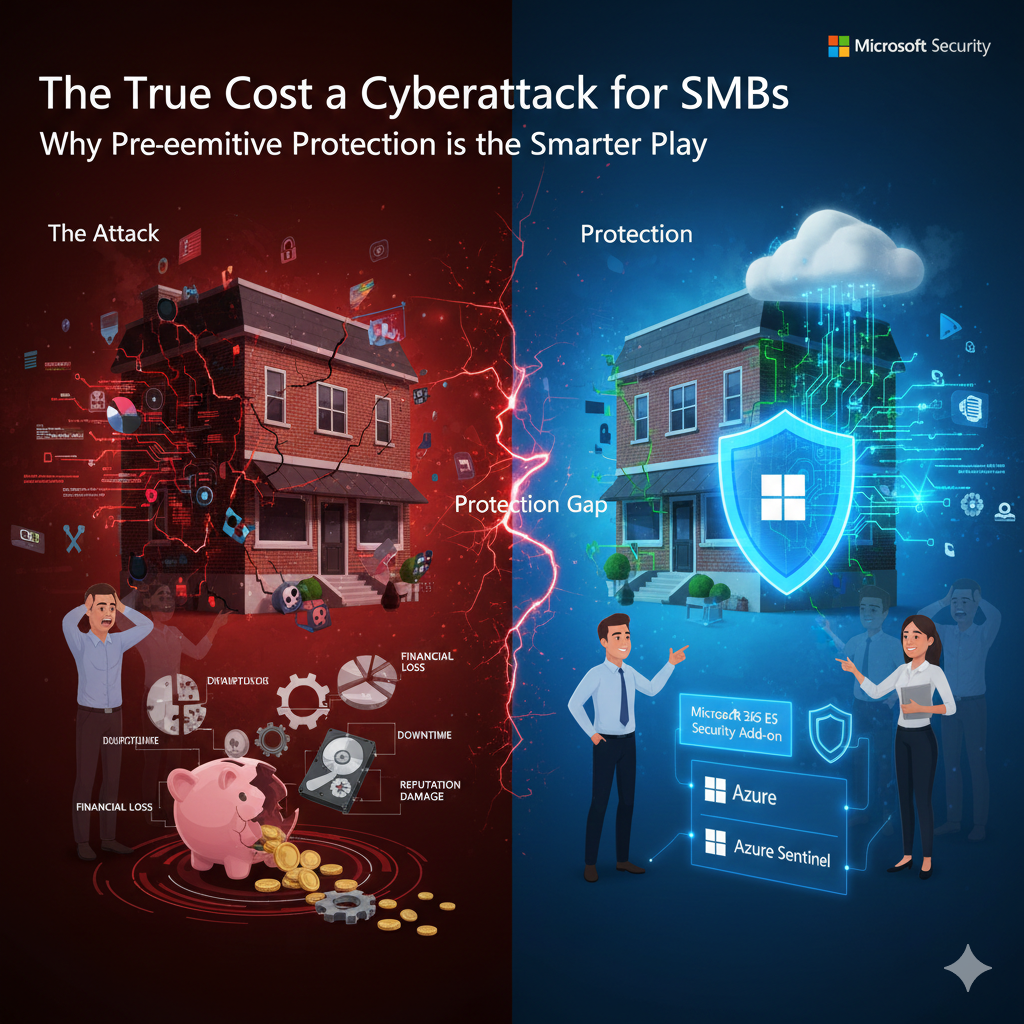
But cyberattacks don’t wait for all the boxes to be ticked. Today’s attackers exploit that protection gap, the space between what businesses think they’ve covered and the advanced tactics now used against them.
All too often, it’s simple mistakes that create the openings:
- Tools that aren’t integrated or updated regularly
- Accounts with excessive permissions
- A single missed phishing email
- Employees unaware they’re being targeted
The issue isn’t that these businesses failed to act, it’s that they didn’t act early enough.
Why Prevention Costs Less Than Recovery
It might sound counterintuitive, but investing in proactive security typically costs less than dealing with even a moderate-sized attack. And that logic doesn’t only apply to money.
By securing your systems in advance, you protect:
- Time, avoiding reactive firefighting and emergency response
- Confidence, among your customers, team and stakeholders
- Business continuity, keeping daily workstreams and delivery intact
- Legal exposure, reducing the risk of non-compliance or regulatory scrutiny
The right investments, whether in modern tools or expert partnerships, create a foundation where incidents are less likely to occur and far easier to contain when they do.
Getting Started Doesn’t Have to Be Complicated
One reason many SMBs delay action is because good security seems expensive or confusing. But the truth is, you don’t need a dedicated cybersecurity department or enterprise-level licensing. You just need the right approach for your size, team and risk profile.
That usually means:
- Reviewing existing vulnerabilities across your apps and endpoints
- Putting early detection and incident response tools in place
- Limiting unnecessary user access to sensitive data
- Working with an expert who can monitor and advise on emerging risks
If you’re already using Microsoft 365 Business Premium, extending it with a security-focused add-on can make a big difference. The Microsoft 365 E5 Security Add-on is one example, it adds advanced detection, identity protection and broader threat visibility to your existing Microsoft environment. That opens the door to coordinated, layered defence without requiring multiple disjointed products or services.
It’s Not About the Tech, It’s About the Business
Cybersecurity isn’t about being afraid, it’s about being ready.
Every day, SMBs face new pressure from smarter threats and tighter expectations. But with the right support and the right tools, securing your business is totally achievable, even for small teams and stretched budgets.
Don’t wait until something goes wrong to start thinking about what it might cost. By then, damage will already be done. Instead, start the conversation today, so your business is prepared tomorrow.
Contact us to find out more.